"Regular" doesn't mean once a day for everyone. NIDDK describes constipation as having fewer than three bowel movements a week, or stools that are hard, dry and difficult to pass. What matters is what's normal and comfortable for you. These everyday habits help most people stay on track.
1. Increase fiber gradually
Fruits, vegetables, beans, whole grains, nuts and seeds add bulk. Increase slowly over a couple of weeks so your gut can adjust without extra gas.
2. Drink water with that fiber
Fiber works best with fluid. Keep a glass of water nearby and sip through the day.
3. Start the morning with a routine
Many people find that a warm drink and breakfast trigger the natural "gastrocolic reflex" — the gut's tendency to get moving after a meal.
4. Don't ignore the urge
Delaying a bowel movement repeatedly can make stools harder over time.
5. Move every day
Physical activity stimulates the muscles of the intestines. A short walk after meals is an easy start.
6. Mind your posture
Raising your feet on a small stool so your knees are above your hips can make going easier.
7. Include fermented foods
Yogurt, kefir, sauerkraut and kimchi add variety to your diet and naturally contain live cultures.
8. Review your medications
Some medicines, including certain pain relievers and iron supplements, can cause constipation. Ask your pharmacist or doctor — don't stop prescribed medication on your own.
9. Know when to see a doctor
Blood in the stool, unexplained weight loss, severe pain or a lasting change in bowel habits all need medical attention.
Where Gut Save fits
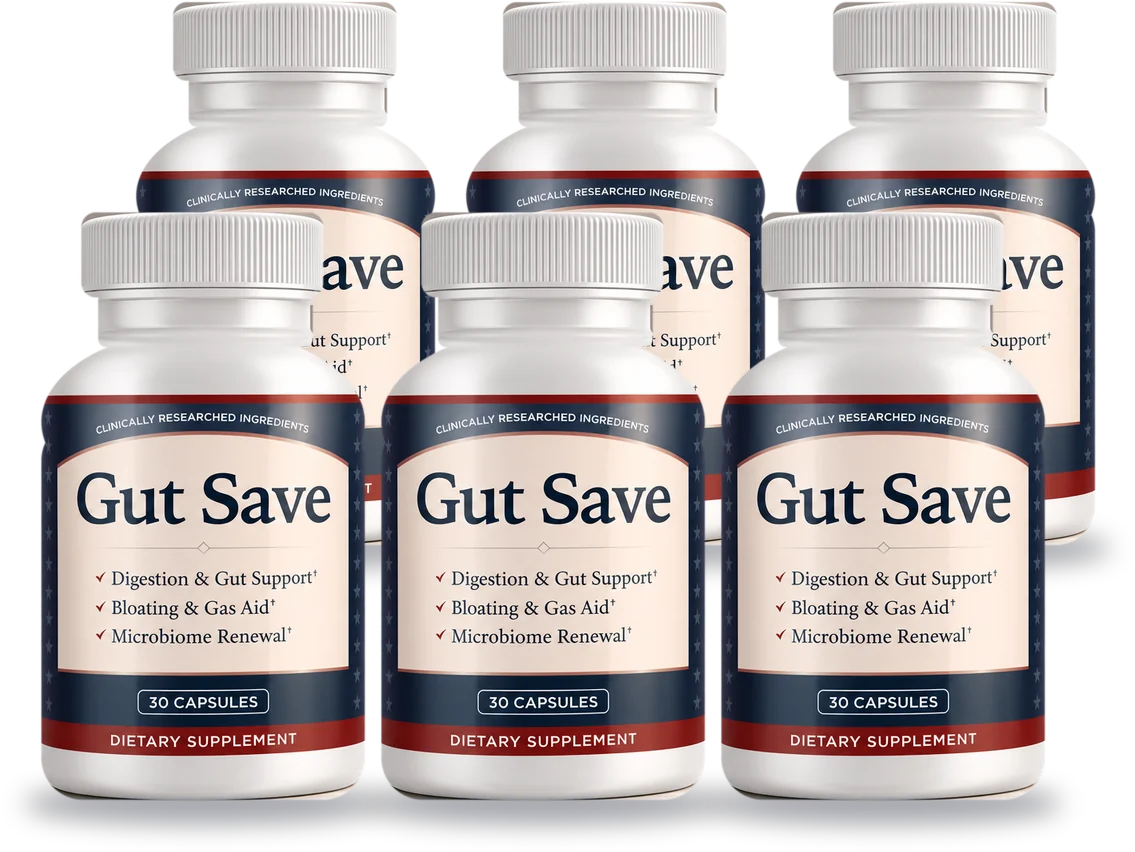
Gut Save is a once-daily capsule taken in the morning with a big glass of water — which fits neatly into habits 2 and 3. It supports regularity as part of these habits, not instead of them.† See the regularity focus area.
Explore Gut Save
A once-daily capsule with collagen, colostrum, lion's mane, papaya seed, black cumin and five probiotic strains, backed by the seller's 60-day guarantee.
This article is for general education and isn't a substitute for advice from your healthcare provider. † Statements about Gut Save have not been evaluated by the FDA.